The research notebook

 that talks back.
Bring your PDFs, articles, and videos. OpenBook answers with citations, builds the study material for you, and turns the whole library into a podcast you can interrupt.
Bring in the sources and tools your research already lives in.
More connectors are being added continuously.
Your sources are uploaded.
Your answers still need proof.
Chat gives you fluent text. Search gives you raw hits. OpenBook reads across your whole library, picks the passages that actually answer the question, and cites every one of them.
connected sources
Where did this claim come from?
PDFs, web articles, YouTube transcripts, Google Docs, and Notion pages each hold one piece of the answer, and none of them tell you which piece matters.
openbook.chat()
What should the model actually read?
OpenBook retrieves the passages that answer your question, keeps them inside the context budget, and hands the model one grounded set of evidence.
A cited answer,
not a confident guess.
Every reply points back to the passage it came from — the page of the PDF, the timestamp in the video, the paragraph on the page. You can check the claim instead of trusting it.
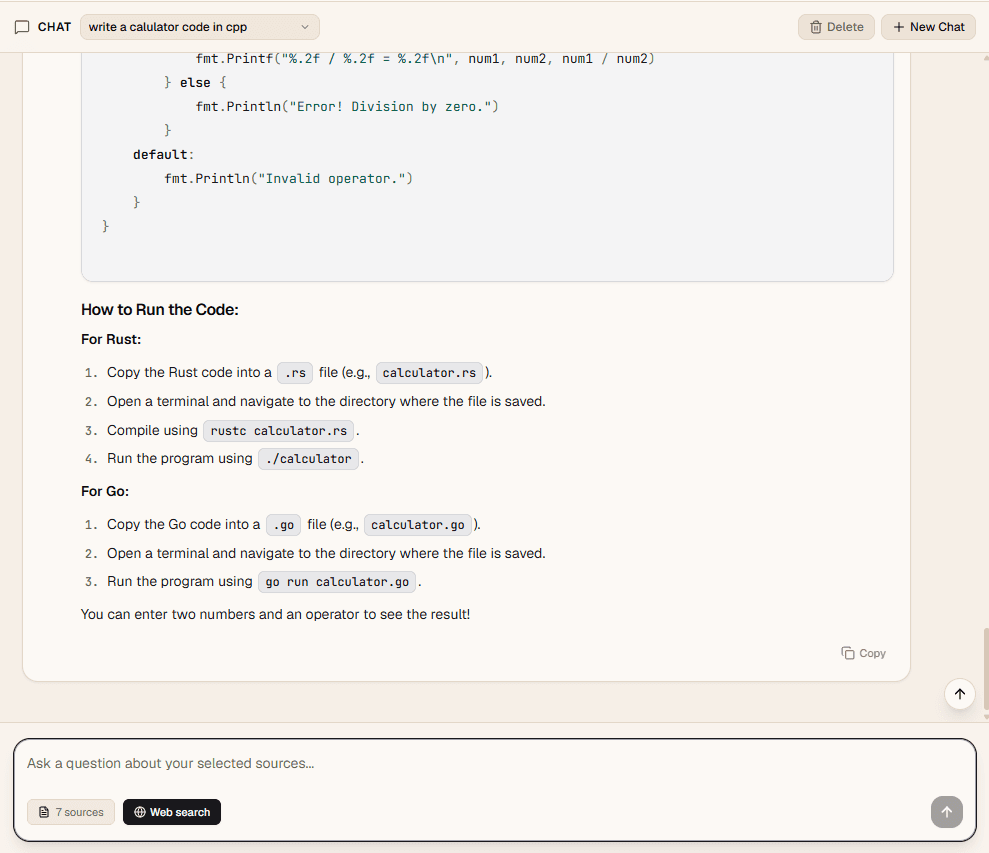
Connect the sources
your work already uses.
Import straight from Google Drive and Notion, drop in PDFs, paste a URL, or pull a YouTube transcript. Everything lands in one library your notebook can reason over.
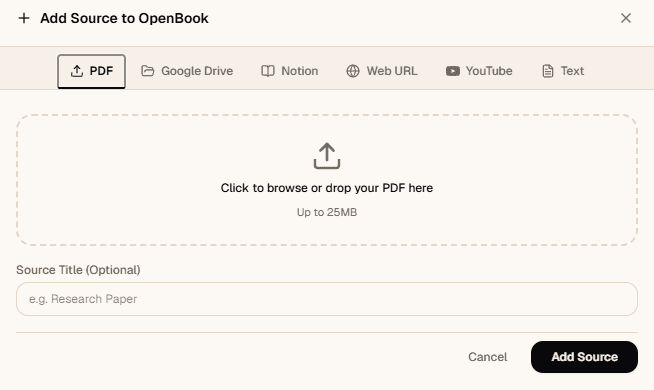
A podcast you can
interrupt mid-sentence.
Alex and Jordan debate your sources out loud. Pause the episode at any timestamp, ask a question, and hear an in-character answer grounded in your notes before the show picks back up.
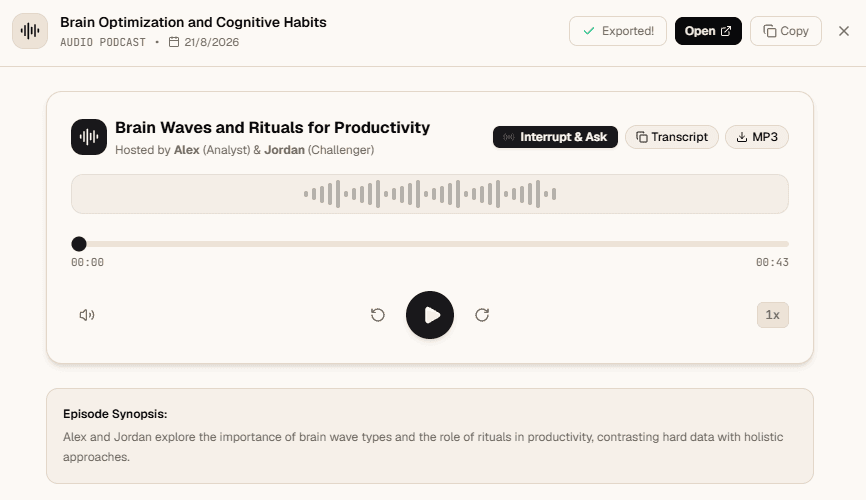
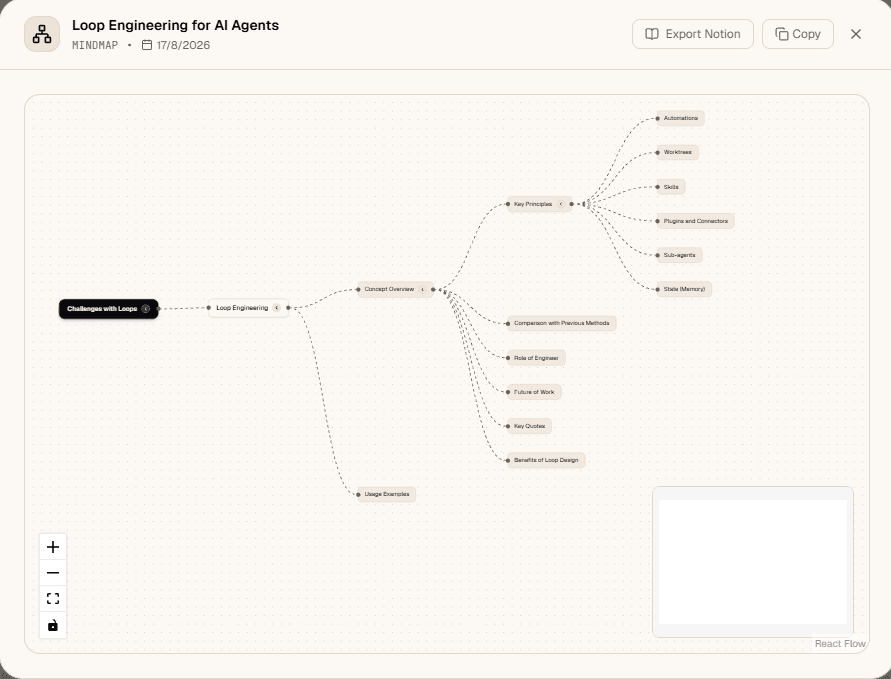
Flashcards, quizzes,
and mind maps on tap.
Studio turns the same library into summaries, key takeaways, flashcards, practice quizzes, and mind maps. Memory remembers how you like to learn, and you can export any artifact to Notion.
The practical
bits, answered.
What OpenBook grounds, what it generates for you, and what stays under your control.